
The invisible work behind the performance

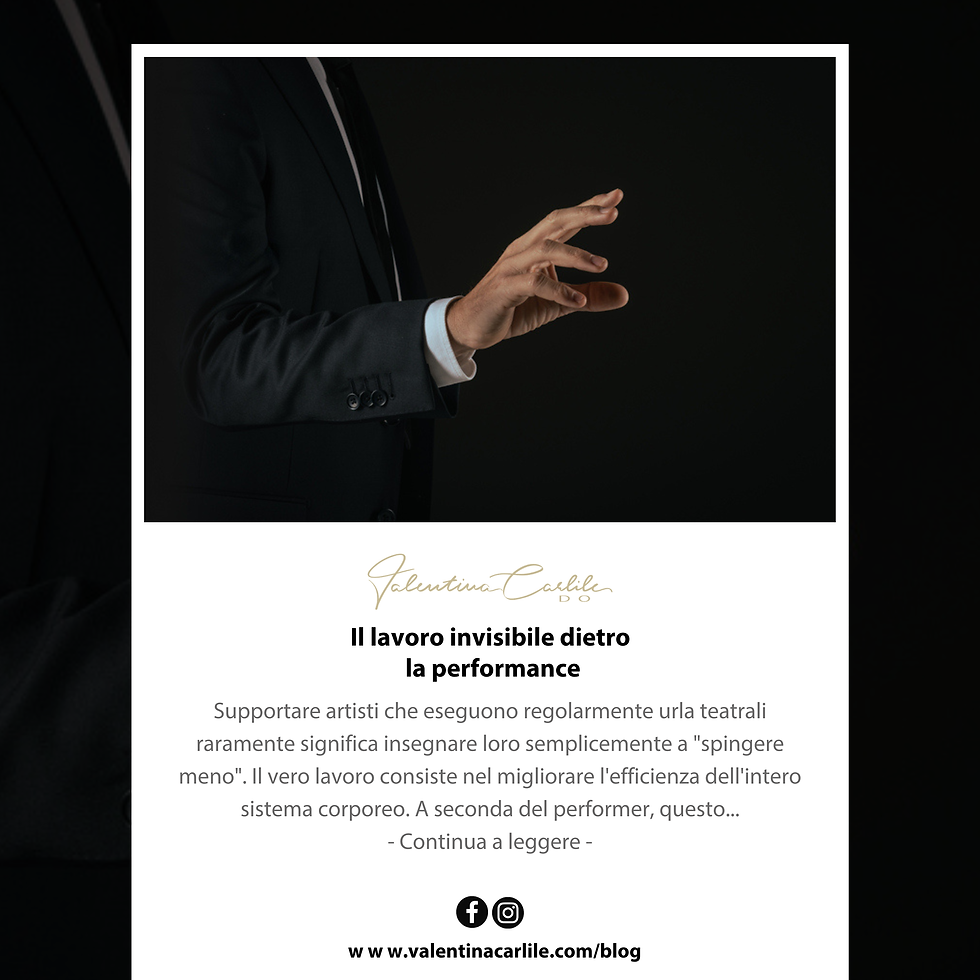
Supporting performers who regularly execute theatrical screams rarely involves teaching them to "push less."
Instead, the work focuses on improving efficiency throughout the entire body.
Depending on the performer, this may include:
restoring thoracic mobility
improving respiratory coordination
reducing unnecessary cervical tension
optimizing mandibular mobility
releasing suprahyoid overactivity
improving sternocostal mechanics
balancing postural load
monitoring recovery between performances
Sometimes small manual interventions produce surprisingly large changes in vocal efficiency.
Not because they make the performer stronger.
Because they remove unnecessary obstacles.
Recovery starts before the scream
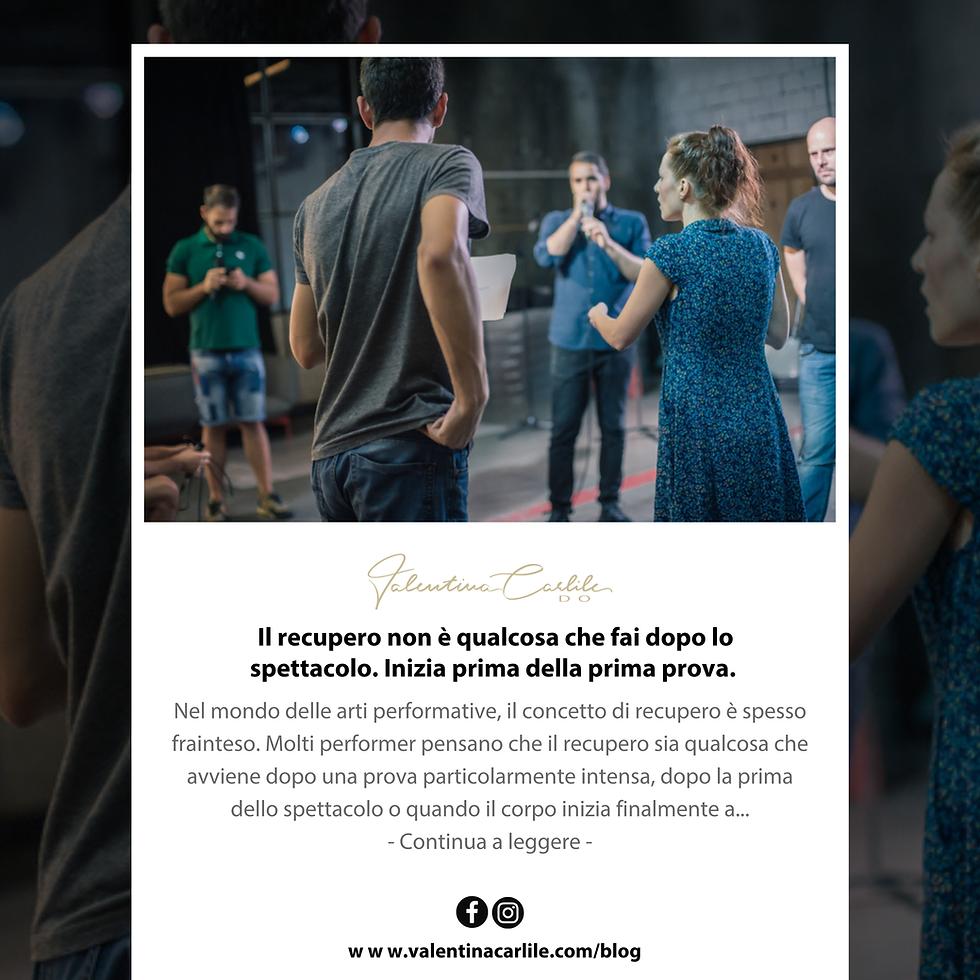
Recovery is often misunderstood as something that happens after the performance.
In reality, recovery begins before the first rehearsal.
A performer arriving already fatigued has less physiological reserve available.
The same theatrical scream will therefore require more effort.
Performance medicine is not simply about treating fatigue.
It is about managing fatigue before it accumulates.
The goal isn't a louder scream
The objective is never maximum volume.
It is maximum repeatability.
The ideal theatrical scream should:
communicate believable emotion
remain vocally sustainable
preserve vocal quality
require minimal unnecessary muscular effort
allow consistent repetition throughout the production schedule
The audience should believe the performer is losing control.
The performer should remain completely in control.
Performance medicine thinks differently
Traditional clinical success often sounds like this: "The patient's throat feels better."
Performance success sounds different: "The performer completed every rehearsal and every performance without vocal deterioration."
Those are two very different outcomes.
Valentina Carlile - Osteopath specializing in Osteopathy for Voice and Speech Disorders since 2002. For information and bookings, visit the Contact page.



Comments