
The “Theatrical” Scream and Vocal Strain: Why a Fake Scream Can Cause Real Vocal Injury

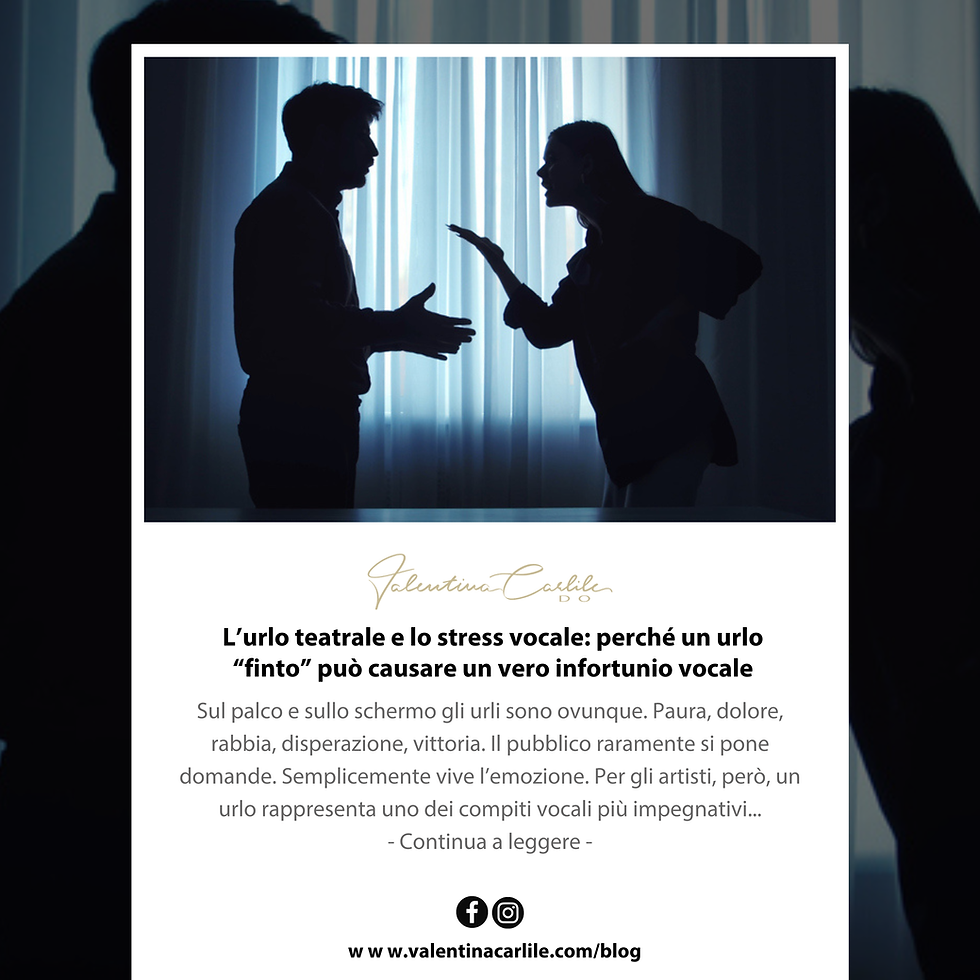
On stage and on screen, screams are everywhere. Fear, pain. rage, grief, victory.
Audiences rarely question them. They simply experience the emotion.
For performers, however, a scream is one of the most demanding vocal tasks they may be asked to execute, especially when it must be repeated dozens of times during rehearsals, performances, or multiple filming takes.
Ironically, the scream that sounds spontaneous is often the one that requires the greatest technical control.
One of the most common misconceptions in theatre and film is that screaming is simply shouting louder. It isn't.
A true theatrical scream is a carefully controlled vocal event designed to create the illusion of maximum intensity while minimizing unnecessary biomechanical stress.
Without appropriate technique, performers often compensate by increasing muscular effort throughout the entire vocal tract.
This typically results in:
excessive laryngeal compression
elevated laryngeal position
increased tongue root tension
jaw rigidity
cervical muscle overactivity
respiratory inefficiency
The audience hears a scream, the clinician sees an overloaded system.
The body screams before the voice does. Many people think vocal fatigue begins inside the vocal folds. In reality, overload usually starts much earlier. The entire body participates in producing a theatrical scream.
This includes:
breathing mechanics
rib cage mobility
abdominal pressure regulation
thoracic stability
cervical posture
mandibular freedom
tongue mobility
vestibular control
emotional regulation
When one of these systems becomes inefficient, the voice often compensates.
And compensation is expensive.
Repetition changes everything. One scream is rarely the problem. One hundred screams are.
Professional performers may repeat the same vocal action:
during vocal rehearsals
technical rehearsals
dress rehearsals
previews
eight shows per week
multiple filming takes
A scream that is biomechanically acceptable once may become harmful after repeated exposure.
This is exactly why clinicians working in performance medicine think differently from clinicians working in standard outpatient settings.
The question is never: "Can the performer scream today?"
The real question is: "Can they still scream safely after the fiftieth repetition?"
Fatigue appears before pain. Pain is a late warning sign.
Long before discomfort appears, performers often experience:
reduced vocal flexibility
slower recovery after performances
increased neck stiffness
loss of vocal endurance
inconsistent vocal quality
increased physical effort for the same sound
These subtle changes often indicate that the system is accumulating load faster than it can recover.
Ignoring them usually leads to larger problems later.
Valentina Carlile - Osteopath specializing in Osteopathy for Voice and Speech Disorders since 2002. For information and bookings, visit the Contact page.


Comments